
Why cranes?
On migration, serendipity, and the long road into conservation writing.

My first national conservation feature was pitched to me at a concert in summer ‘23. Not a journalism panel, not over email—an actual concert. 49 Winchester, my favorite group, at the Windjammer on Isle of Palms, South Carolina. If you’ve ever been, you know it’s one of those oceanfront hangouts where the sound of waves bleeds into guitar riffs and the beer flows as freely as the sea breeze. The pitch came from my boyfriend’s roommate’s girlfriend’s friend, amidst a screaming crowd.
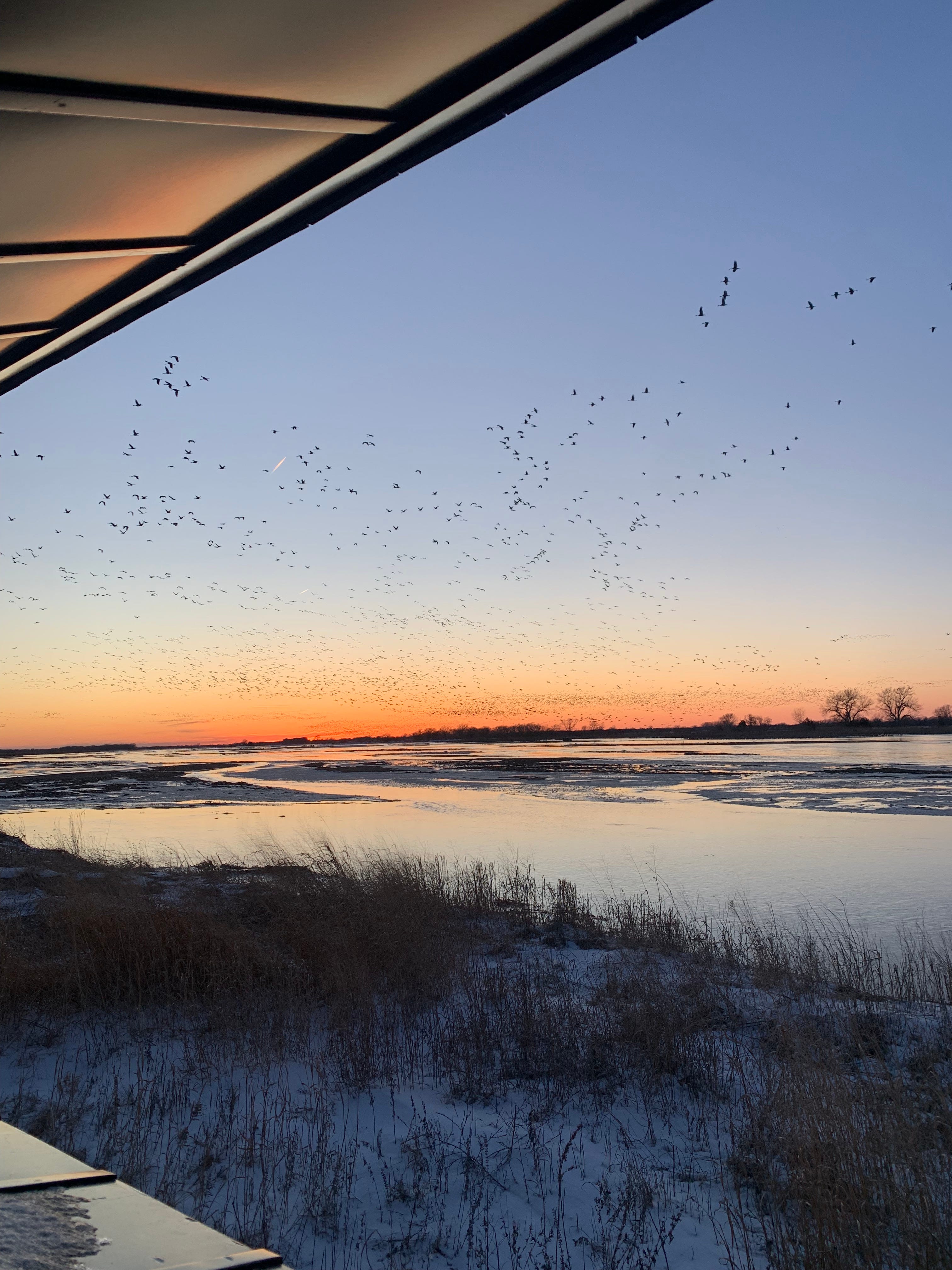
At first, I was skeptical. Who in their right mind signs up to watch birds all day, from sunrise to sunset, in sub-zero Nebraska? Four days straight. In the snow. In the wind. In the middle of nowhere.
I’d never written anything quite like it. But I knew in my gut that conservation was where I wanted to go. I didn’t know how exactly, or where it would lead, but I knew this was a path I could walk—and run—down. The idea lodged itself in my brain, and like the cranes themselves, it stayed in motion.
This was the first story I ever pitched to Covey Rise, and the pitch itself? A monstrous 1,000 words. (Pro tip: don’t do that.) I didn’t have a single clip that said “I know how to interview biologists” or “I can handle scientific details.” But I did have—curiosity, determination, and an itch for storytelling in my bones that I couldn’t ignore. Luckily, my editor saw that. He saw the angle. And, I like to think, he saw my appetite for storytelling.
Before I even boarded the plane, I knew everything I could possibly know about cranes. Hours of research. Pages of notes.
Did you know that cranes are among the world’s oldest living birds? They’ve outlasted millions of species—99% of which have gone extinct. Cranes were here during the Eocene Epoch, which ended 34 million years ago.
They are survivors. Shape-shifters. Dancers. Symbols. And I got to see them up close.
Brad Mellema, the Executive Director of Grand Island Tourism, showed us around. His photos of the cranes ended up running in the magazine alongside my story, which still feels like an honor—Covey Rise is one of those rare publications where a byline or photo credit feels like a badge. It’s my favorite.
And then came the coincidences, or god winks, as I interpret them.
I spent multiple days on the river and in the blinds with Dr. George Archibald, co-founder of the International Crane Foundation. If his name sounds familiar, he’s the man who danced with a whooping crane for seven years in an effort to save the species. We had no idea he’d be there. No formal heads-up, no tip-off. Just showed up in the same fields, watching the same birds. That’s the magic of stories like these: the best parts are never planned.
Naturally, in a true “small world” fashion, he knew someone in Charleston—one of the owners of The Post and Courier, Charleston’s newspaper, where I spent a year on staff.
Turns out, cranes have an unexpected fan club. Lorde is a craniac. So is Jane Goodall, who used to visit Nebraska annually to witness the migration. And somewhere along the way, I met Jim Henson’s daughter. Yes, that Jim Henson—creator of the Muppets and the beloved Kermit the Frog.
It felt serendipitous. A year later, I’d find myself on a Mississippi road trip for another assignment, stopping in Greenville—Henson’s hometown—and eventually visiting Birthplace of the Frog: An Exhibit of Jim Henson’s Delta Boyhood in Leland, Mississippi. None of that was planned either. But that’s how this work goes. The road always loops back around.
This remains one of the pieces I’m most proud of. And the one I’ve spent the most time on—after all, I watched birds for four straight days, sunrise to sunset. You don’t come back from something like that unchanged. You come back a little more attuned to the earth under your feet.
I worked with Turner PR on this story, and I’ve since worked with them on several others—Tupelo, MS, biking gear for REI in National Geographic (before they sunsetted their commerce sector, RIP), and a handful of South Carolina tourism pieces. They’re fabulous, and one of my favorite PR firms.
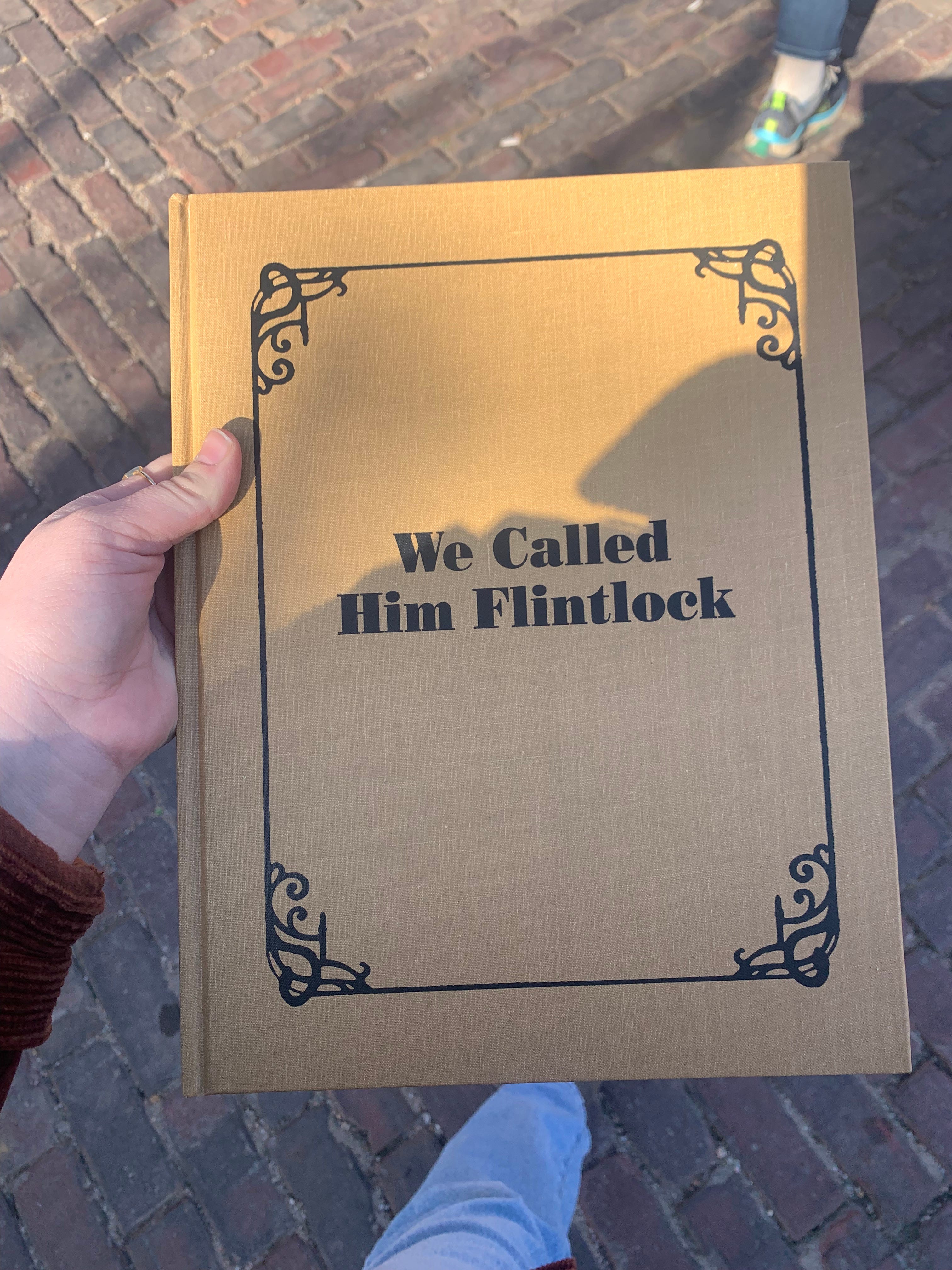
We wrapped up the trip with a night in Omaha, where I wandered into a used bookstore (as I do). There, waiting on the shelf like a sign, was an Archibald Rutledge book. If you know me, you know Rutledge is everything I aspire to be as a writer—South Carolina’s first poet laureate, a prolific sporting writer, and one of the great chroniclers of Lowcountry life. His work for Field & Stream in the 1930s remains some of the best outdoor writing out there. Most of his books are long out of print. But I find them in strange corners of the world. Like a breadcrumb trail.
And maybe that’s what this story really is. A breadcrumb. A marker on the trail toward something deeper. Because that week in Nebraska wasn’t just about cranes. It was about calling. About clarity. About the stories that find you.
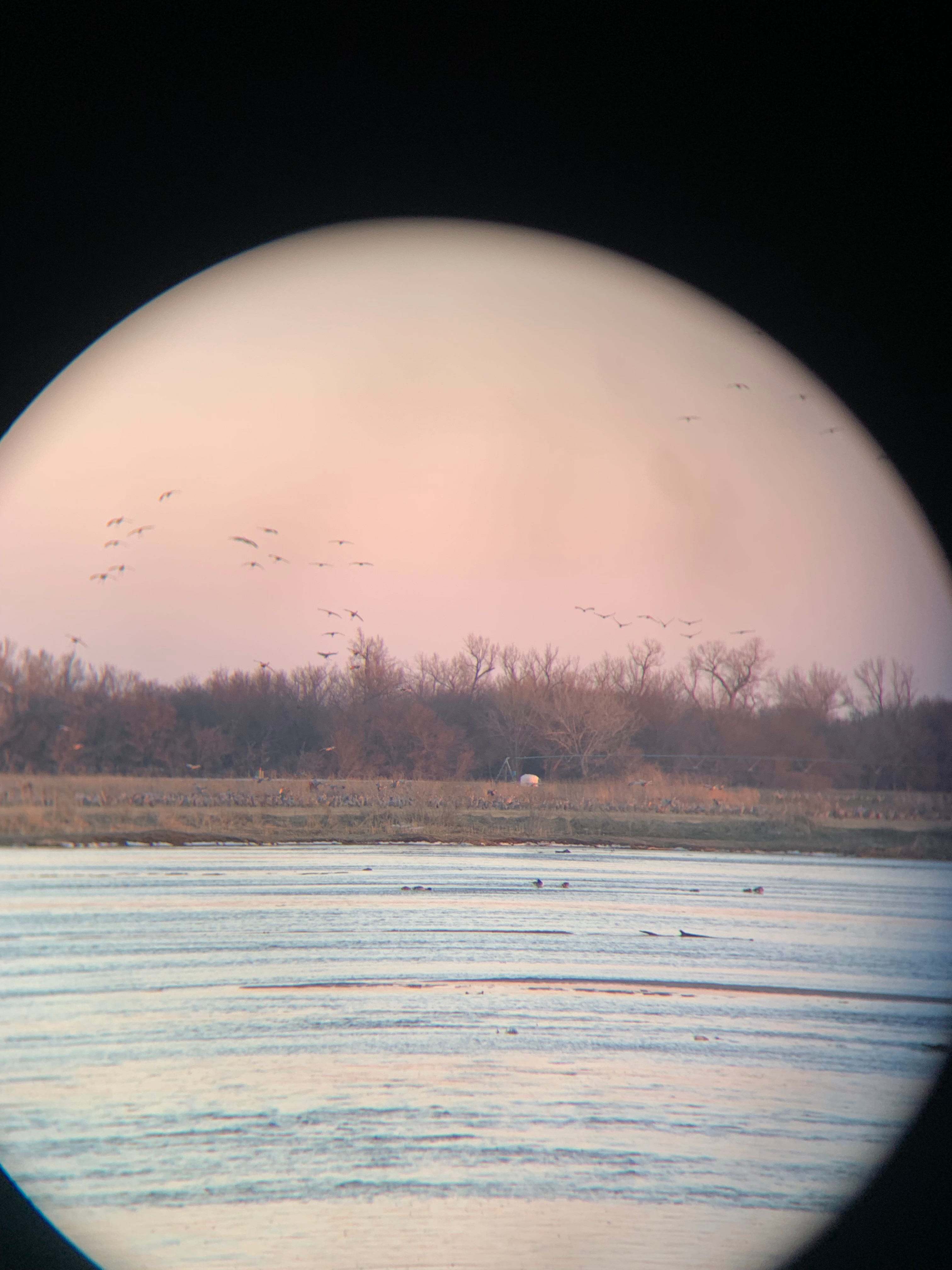
And now, three years later, I’m on a plane to Port Aransas, Texas, for the whooping crane migration and the whooping crane festival—founded by Dr. George Archibald.